Embodied Resilience and Youth Work: What I Learned from an Embodied Resilience Training.
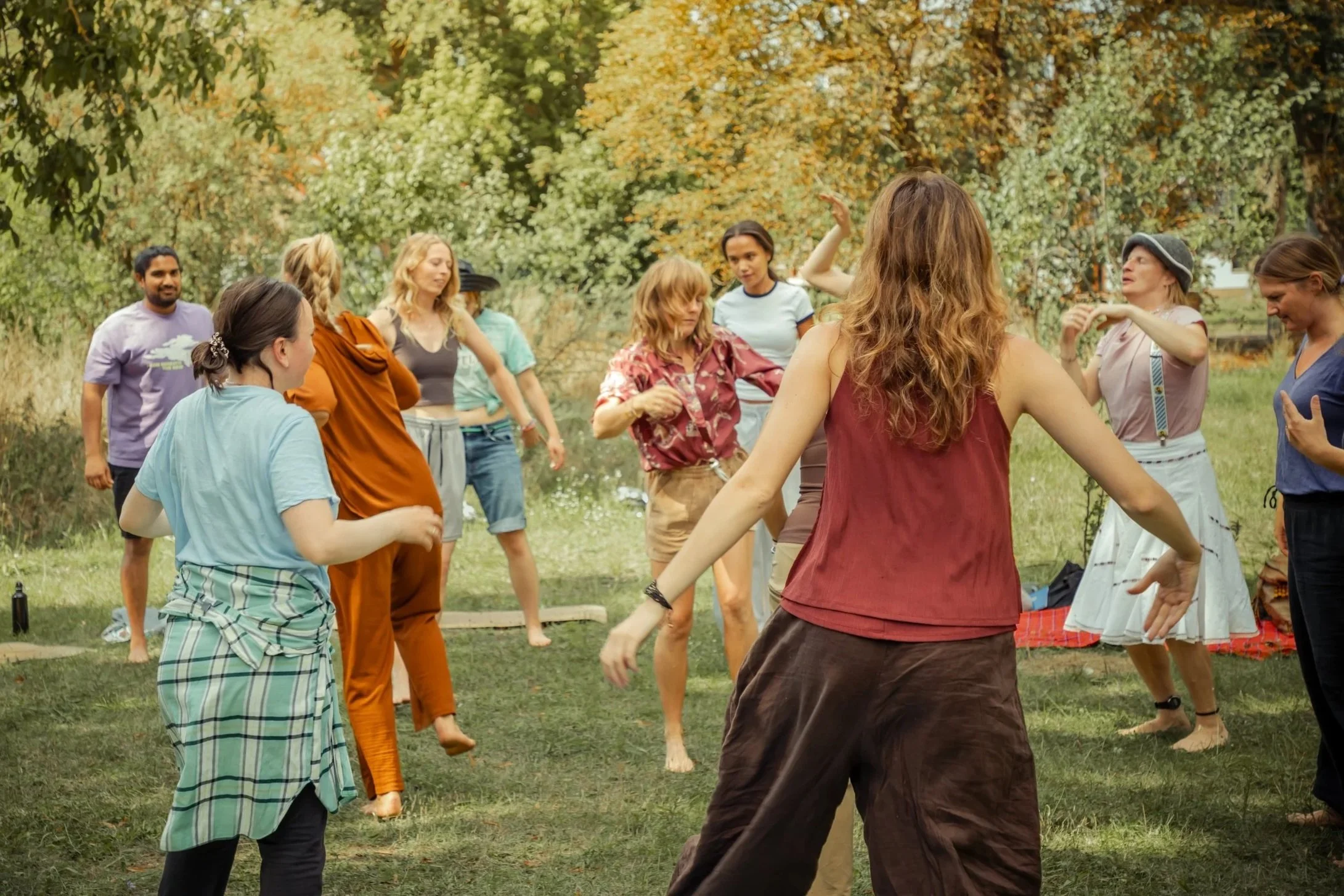
Photo credit: @gabrielbangura_
After an inspiring conversation over lunch with colleague Asena Boyadzhieva back in May, I came to hear of a forthcoming ‘EMBRACE - Embodied Resilience Academy for Collective Enaction Embodied Resilience’ training for facilitators and youth workers - my ears pricked up!
During my life in the Egyptian revolution, on humanitarian aid missions and later working with climate (and other) activists in Austria, through the WWF Austria, Generation Earth, Civil Action Network and Humus, I’ve seen people drawn to the front lines of causes. Activists get so absorbed that they overlook the need to restore themselves. It’s like a vacuum effect, which of course has adverse consequences especially on young people.
Oftentimes a current crisis can appear so desperately needing a solution that one feels they cannot stop the work they are doing, but the truth is, most problems of scale did not start yesterday and will not end tomorrow. Taking time to recharge oneself is absolutely essential.
So, the question for me is always how do we continue the good work in the world whilst remaining resilient for ourselves, as well as for other people?
Why Embodied Resilience Matters in Youth Work and Activism
In the past I’ve shared my programme Embodied Activism for Collective and Self wellbeing with young activists through Tipping Points (annual conference for skill sharing and methods for social movements in Austria), and Embodied Practices for Collective and Self wellbeing for post-graduate students on the Peace & Conflict MA programme at Innsbruck University (offering body-oriented approaches to conflict transformation). This work is grounded in Johanna Macy’s Work That Reconnects values and frameworks, mixed with Holistic Dance, somatic movement and dance improvisation practices. And, I aim to develop this work and take it further.
So, when the good folks at coMetta invited me to join their Embodied Resilience training in August 2026, I was so curious as to what they would present. Their programme structure outlined working with self, other and environment, which is a structure I also use, but how were they going to disseminate their material on the subject matter, and to what effect on the participants?
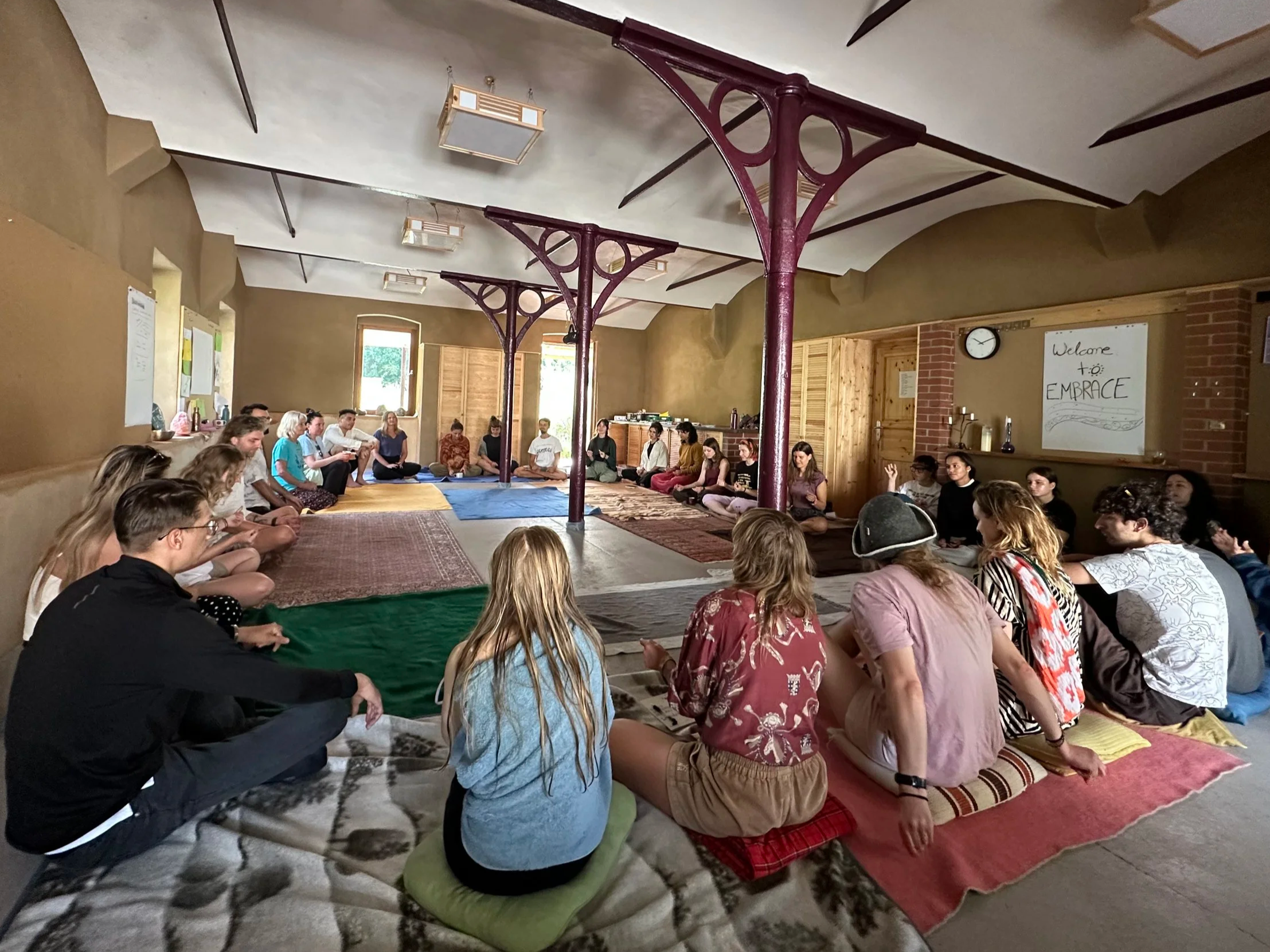
Photo Credit: Theresa Strasser
The training touched on a mixture of practices drawing from Holistic Dance and Social Presencing Theater, frameworks from Mark Walsh’s Embodiment Unlimited, and Bill Plotkin’s Four Facets of the Self… plus a healthy dose of systems science. In general a good recipe of individual harvesting, reflection, group work, brain food, inside and outdoor activities, and all based at ecovillage Think Camp in Brandenburg, Germany, close to a big river and the Polish border.
The facilitators and organisers were Asena Boyadzhieva, Theresa Strasser, Guðmundur Haraldsson (Gummi) and Tamás Gomori. We started by exploring our terms, asking: what do we collectively understand by the word “Resilience”? We were then invited to draw upon our personal experiences in order to conjure up a sense of resilience within oneself.
Exploring Resilience Through the Body.
In trying to recall an occasion when I have been resilient I unexpectedly dove deep into my recent crisis. I am sure that was not the same for everyone. The difficult case of me leaving my partner and home almost one year previously, instantly became my material.
Bringing forth these memories in the frame of resilience, rather than dwelling on the sadness or focusing on the difficulty itself gave me a shift in perception. I suddenly saw myself in another phase, one that had survived the struggle and agony. Potentially that was my biggest personal takeaway, and already at the beginning of the training.
Recalling old memories can hold negative and/or positive emotional perceptions as resonance. This might show up as difficult feelings, a sense of pride that one has overcome the situation or it can also bring a wealth of gratitude for one's ability in adverse circumstances and for those that helped along the way. In recognising these things some healing can occur.
(Side note - It reminded me of the extensive work we did in 2024-25 at the Democratic Odyssey, harvesting our experiences on Crises in the EU and coming up with a charter. Something I am yet to write about).
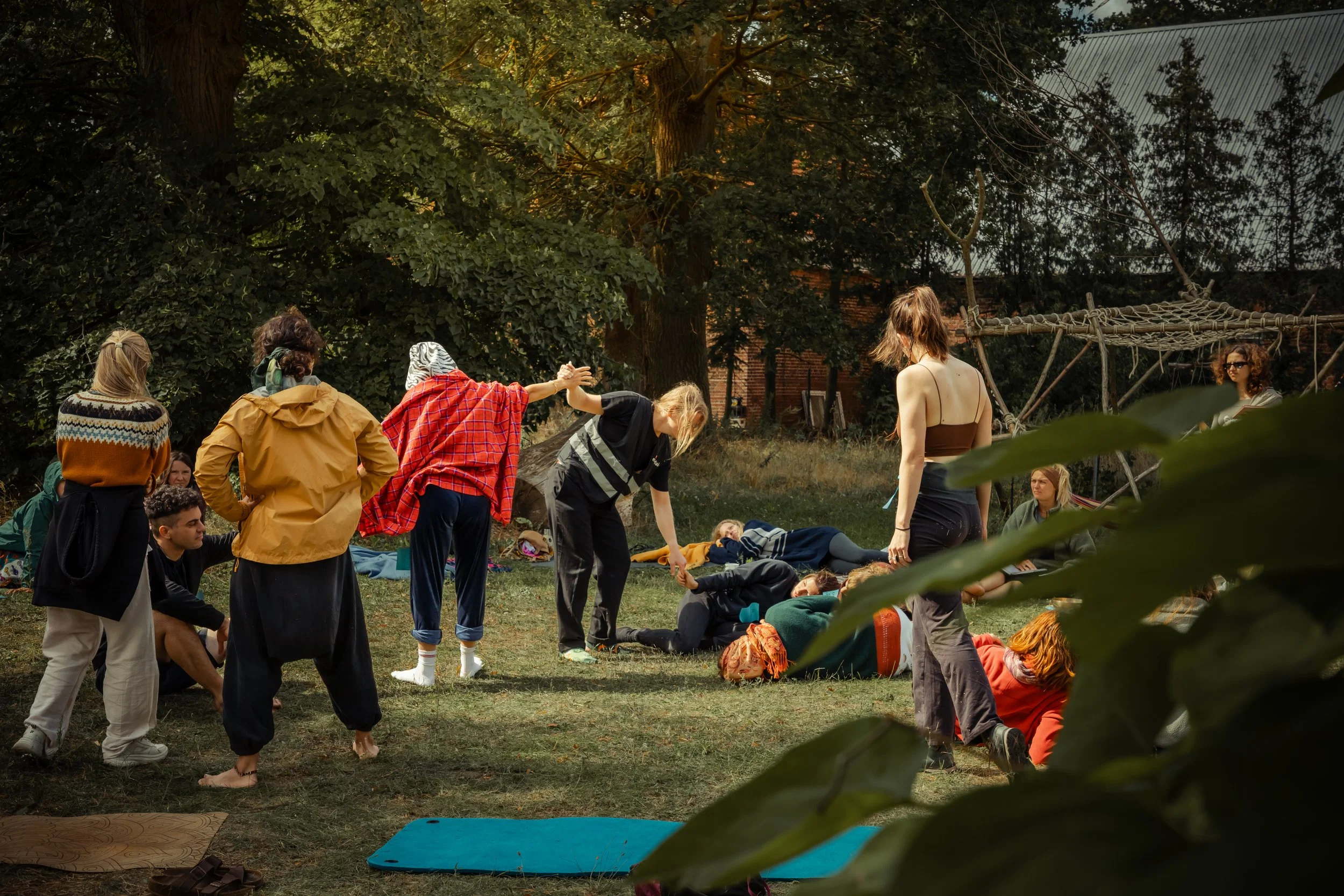
Photo credit: @gabrielbangura_
Embodiment and the Four Elements.
We moved on to explore our collective understanding of “Embodiment”, many voices made our tapestry of understanding. We were led through an embodiment model from Mark Walsh’s Embodiment Unlimited that uses the four classical elements. Many wisdom traditions work with the elements, this contemporary model uses them to look at our tendencies and identify dominant elemental preferences. And when you bring awareness to your tendencies, it creates an opportunity to change them.
In my interpretation tendencies were categorised as ‘Earth’ (stability, control, pragmatism, being grounded, knowing where one is going, having structure), ‘Water’ (flexibility, receptivity, flow, relational, emotional, adaptable), ‘Fire’ (drive, energy, action, directional), and ‘Air’ (vision, creativity, change, lightness).
One by one we explored each element through embodied actions relating to these qualities, including contemplating the flip sides. I saw it as a way to calibrate the different aspects of oneself. Like a medicine wheel in native American cultures where you have the four quadrants, which I was first introduced to by Heredity Chief Brother Phil Lane.
Discovering My “Water” and “Fire”.
Through the exploration I discovered that, ‘Water’ seemed to be my coping mechanism, a way to survive what is a wash on me. And in ‘Fire’, we were asked to shout “no” over and over, but “no” was literally stuck in my throat. I couldn’t shout properly, it wouldn’t come out.
To resolve, we were to position ourselves near to the element we felt most associated with at this present time. I was kind of floating in the middle because I saw myself in all. And when asked to consider what we wanted to embody more of in our lives, what stood out? Fire.
“Filling up I explore how each element shows up in me. I am not Air says Fire and the reflection of Water ripples: ‘I see you, but in my own image’. You are there but altered into another state simply by the principles of our nature. In a moment of Wind’s rage you are removed, disfigured by a choppy presence of Storm. Oh intensity, oh Fire, your fierceness may never rise above the might of the Ocean, perhaps River you jump or Lake runs dry, but the day Ocean is no more, we all die. I need you Fire not the part that is raging against the summer months of holidays and homes, but the power you hold of a screaming loud shout of “NO!” The fierce anger that is clear like bright golden flames cutting”.
Self-Regulation and Facilitator Wellbeing.
By day two after the initial rush to get there, then launching into my personal topics and interacting with all the wonderful participants, I was seemingly overwhelmed already and needing self-regulation.
Even as a teacher and facilitator myself, it is an ongoing mission of life to find space in the crowd. I clung to the calming morning practices and revelled in set silence until breakfast was over. I really appreciated the group intelligence to suggest ways in which we can act together that make things less overwhelming when embarking on internal processes, and I greatly respect the facilitators for adopting a ‘yes and’ approach to all those useful suggestions that emerged from the group. It really seemed to me that everybody’s voice was heard and nobody was under pressure to finish expressing their thoughts.
Perhaps as a counterpoint to this, overall the schedule was too ambitious and in order to stick to it, participants' voices would have been cut. I prefer a bit of flexibility and improvisation over maintaining a schedule, as that is simply my nature and feels more meaningful - so I really admire the way that they did it.
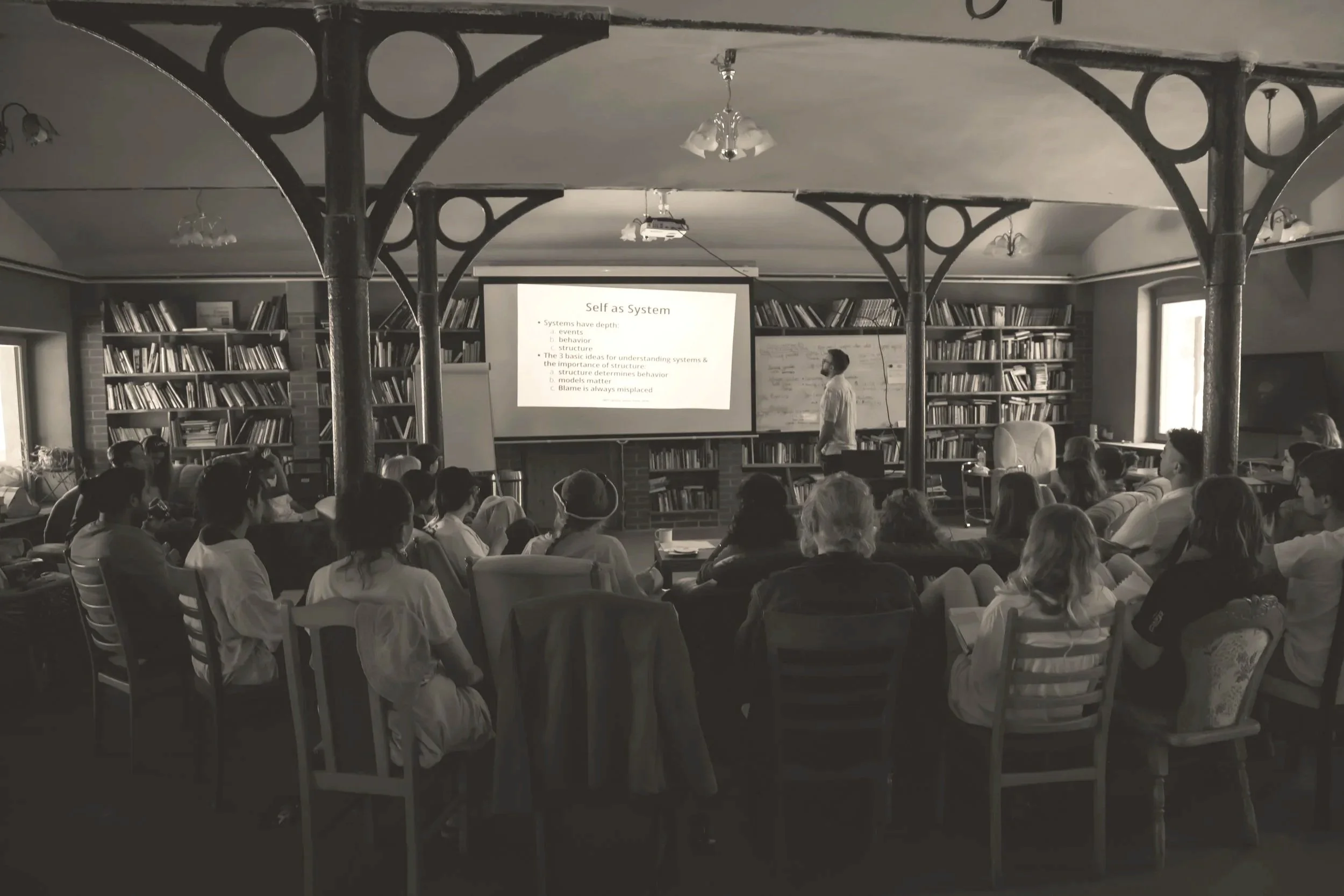
Photo credit: @gabrielbangura_
The moment that brain food was served, I was more than ready. We were fed a very detailed presentation on dynamic systems. There was a lot of juicy information including a participatory component. We all had so many questions, it was hard for the facilitator to move on at times.
We explored relational intelligence of the mind, body and society, and of particular interest to me, to add on to my existing understanding of systems thinking the difference between homeostasis and allostasis. The former being what keeps us alive as a living organism and the later allostasis, pertaining to brainbody relations and defined as "stability through change”. That speaks to me.
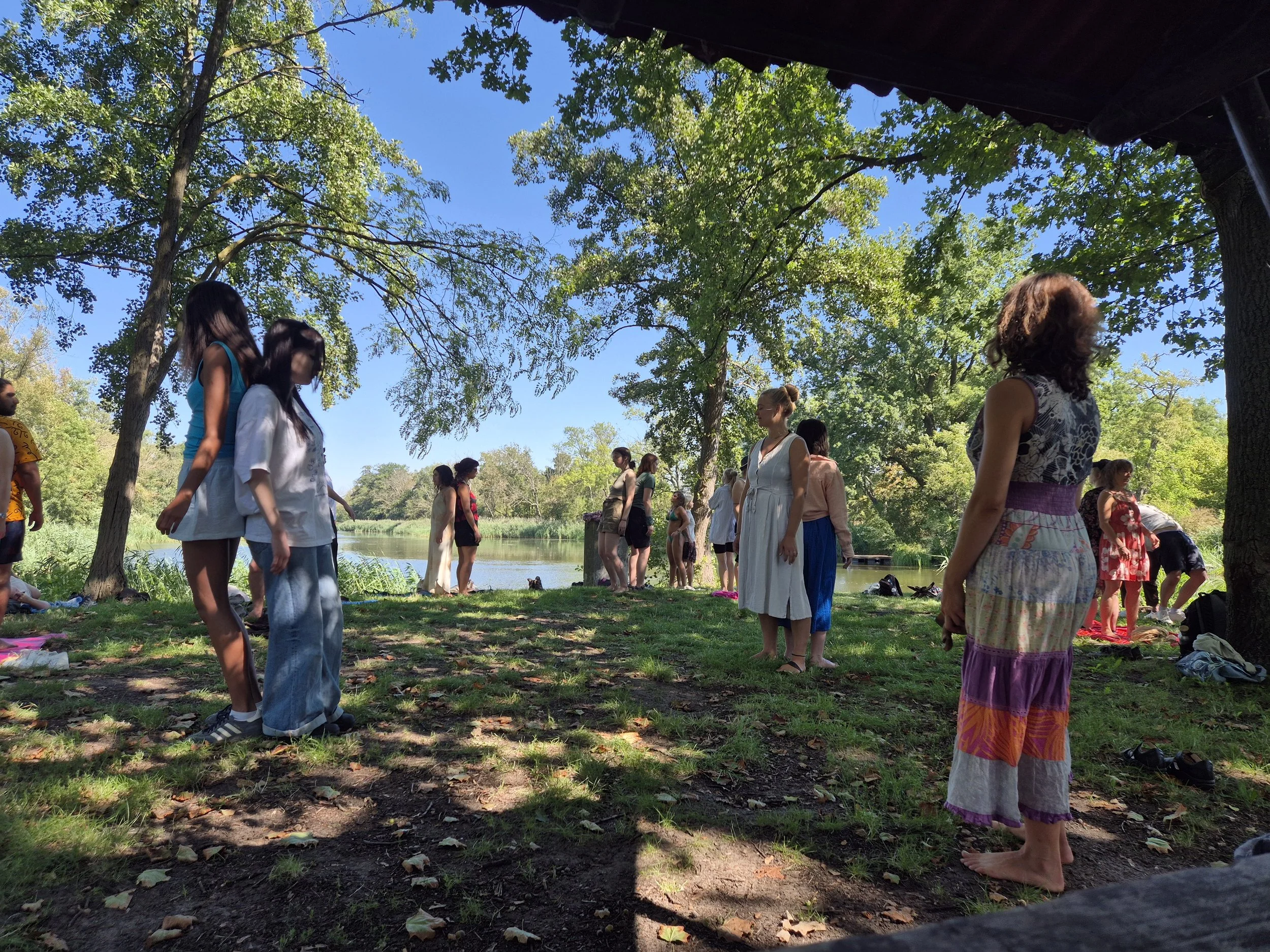
Down by the river. Eco-Somatics: Experiencing Self as Nature.
The most embodied moment for me was down at the river. We did an exercise I know from Holistic Dance and eco-somatics explorations, which I often share myself, or variations of it. We had been asked to find an area and explore the surroundings for some duration and then later take our partner there to experience it too.
The bridge I draped upon, cars to my back, water currents below, fish, petals and flow held me perfectly. All I had to do was hang out, while everything else moved besides, below and atop of me. Here I could simply be. Just be. Nature is so powerful for this. This kind of moment is deeply relaxing for me, the world of to dos melts away.
Vulnerability, Safety and Collective Resilience.
I was already full by the last day when Bill Plotkin’s wisdom was shared briefly. It was not something I am familiar with, although it seems similar to other modalities I am acquainted with. I am sure it’s wonderful, I heard that it is and also, I wasn’t able to take it in directly. My mind was diverting, I could see it firing in multiple directions simultaneously, not allowing me to focus on hearing the facilitator’s voice guiding us through a beautiful visualisation about meeting the future self. Envisioning the future IS the kind of thing I have facilitated previously and strongly encouraged people to explore, but at this moment it did not seem to be available to me. In fact it was terrifying. And it is no surprise after my dreams had been shattered in the last couple of years.
But in all that reflex of avoidance to engage, a wisdom did emerge. Because I couldn’t concentrate, I referred to the paper hand outs clutched by my fingers and used them to pull me in. Without realising, I did the second part first by mistake. We shifted outside for the next bit, where I still couldn’t follow instructions, tried the future self visualisation again to no avail, attempted to take refuge in my meditation practice, and instead cried.
How could I possibly see the future? A week later, reading back my notes, I was surprised to see some clarity and instructions to self. I wrote:
“Meeting the Future - in the 4 faces of self, my topic arose: that of ‘where is home?’.
A deeply unnerving feeling - I say hello to it. I see you.
Hold my solar plexus.
Cry as needed, make art with addresses.
Breathe every day, that is what I can do to show up.”
On the last whole day, four of us participants offered embodiment sessions, including a sample of my work on Cultivating Senses. By the evening the energy was bursting at the seams and a spontaneous techno party emerged lasting into the early hours. A hard dance was needed obviously. And the final day, my Morning Glory held a rising slot.
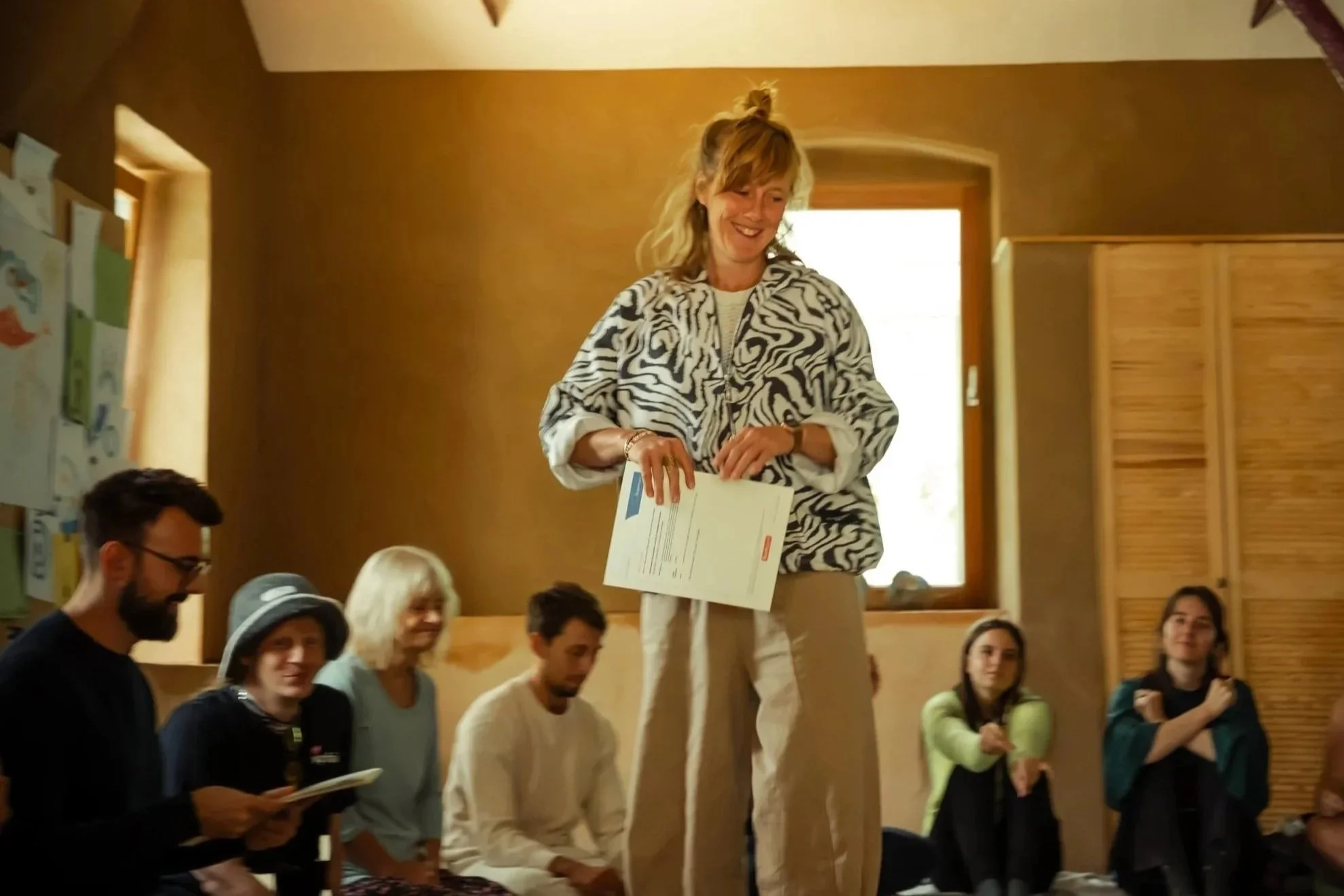
Photo credit: @gabrielbangura_
What I Took Away from the Training.
The EMBRACE training by coMetta was a place to arrive, unwind, disconnect (literally we practically banned the use of our mobile phones), shed, shared & co-created. Nature and the good people of Think Camp eco village held us wonderfully. The group of participants was excellent, it felt like an easy bond formed within the first day after sharing intimate thoughts and feelings that had arisen through the embodied practices.
There was room to be there as leaders as well as simply being ourselves. It was multilayered in that sense. On a professional level it felt safe to go through such a process and receive support from the programme, this is a larger container in which we were held. I recognise the value for youth leaders/ workers, and facilitators.
For an embodiment programme, in my opinion, it could have had more actual movement and dance practices built in, although that seemed to come through the group participants' offerings in the end, and perhaps that was just perfect / had been the objective.
If the programme is to be developed further, rather than including so many methods, I could imagine it being simplified, spending more time with less modalities. This could create a sense of cohesion that would be more favourable for the bodymind to integrate new knowledge and experiences.
Does this training help me take my idea forward to disseminate Embodied Practices for Collective and Self Well-Being to humanitarian NGOs, which was an aim I was open to explore…? Perhaps not directly but let’s see what will grow out of all these new connections.
The training was a Professional Development Activity (PDA) for the European Union’s Erasmus+ Programmes, and we received a certified Youth Pass - Europe-wide validation system for non-formal and informal learning within the European Union youth programmes.
Bottom line: Even as a teacher and facilitator, I need to resource myself and ground in presence, by coming home to my own body and connecting in the body of the collective so I’ll end with some words that Asena shared about a healthy embodied approach in life: